
Production Planning for Reliable Composite Decking Posts
Managing composite decking posts production for international factory deliveries requires strict control from raw material preparation to final inspection. As a WPC extrusion technology engineer, I focus on maintaining stable processing conditions because outdoor products must withstand weather exposure, structural loads, and long transportation cycles. A reliable production system begins with carefully selected wood flour, polymer resin, additives, pigments, and reinforcing agents. Each material batch is checked for moisture content, particle size, purity, and compatibility before entering the manufacturing process.
The material formula directly influences density, strength, appearance, and long term outdoor performance. During formula development, the ratio between wood fibre and plastic components is adjusted according to application requirements, climate conditions, and customer specifications. For composite decking posts used in fencing systems, landscaping projects, or architectural applications, consistent mechanical properties are essential. Production teams record every batch parameter to ensure repeatability between different factory orders and global shipments.
Material Mixing and Pelletising Control
The first processing stage involves high speed mixing, where wood powder, polymer materials, stabilisers, lubricants, and colour additives are blended evenly. Uniform dispersion prevents weak points and surface defects during extrusion. Moisture control is especially important because excessive water content can create bubbles, internal cracks, and unstable pressure during processing. Professional factories use controlled drying systems and monitor raw material storage conditions before mixing begins.
After mixing, many WPC manufacturers use pelletising equipment to produce consistent composite granules. Pellet size and composition stability help extrusion machines maintain a steady feeding rate. The pelletising stage also allows engineers to test material flow behaviour before mass production. Any variation in pellet quality can affect extrusion pressure, product dimensions, and final surface quality, so inspection records are maintained throughout the process.
Extrusion Temperature and Mold Design Management
The extrusion stage transforms prepared WPC material into finished profiles through controlled heating, compression, and shaping. Temperature settings must be carefully adjusted across each barrel zone because wood fibre can degrade under excessive heat. An experienced engineer monitors melt temperature, screw speed, pressure levels, and output rate to achieve stable production. Incorrect settings may cause colour changes, poor bonding, rough surfaces, or dimensional instability.
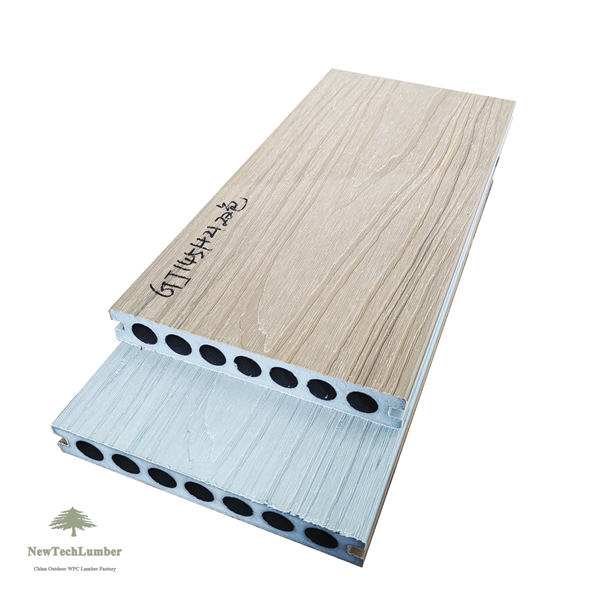
Mold design is another important factor in composite decking posts production. The extrusion die must provide balanced material flow to create a uniform profile without internal stress. Engineers analyse wall thickness, reinforcement structures, corner strength, and cooling requirements before producing the final mould. A well-designed extrusion mould reduces waste, improves production efficiency, and helps manufacturers meet precise customer drawings for OEM projects.
Cooling Calibration and Surface Finishing Standards
After leaving the extrusion die, WPC profiles enter the cooling calibration system. Vacuum calibration tables and water cooling tanks control shrinkage and maintain accurate dimensions. The cooling process must be carefully managed because uneven temperature reduction can lead to bending, twisting, or inconsistent sizes. Calibration equipment is regularly checked to ensure that every batch meets technical specifications required by international buyers.
Surface treatment creates the final appearance and improves product value. Depending on the design requirements, composite decking posts may receive brushing, embossing, sanding, or co extrusion surface layers. These treatments provide natural wood textures, improved colour stability, and additional protection against environmental exposure. Quality teams inspect colour consistency, surface smoothness, and profile accuracy before products move to packaging.
Common Production Problems and Quality Solutions
WPC extrusion factories must identify production problems quickly to avoid delivery delays. Common issues include uneven colour, surface bubbles, insufficient strength, warping, and inconsistent dimensions. Colour variation is often linked to unstable mixing or temperature fluctuations, while bubbles may result from moisture trapped inside the material. Engineers solve these problems by adjusting drying processes, machine settings, and formula proportions rather than relying only on final product inspection.
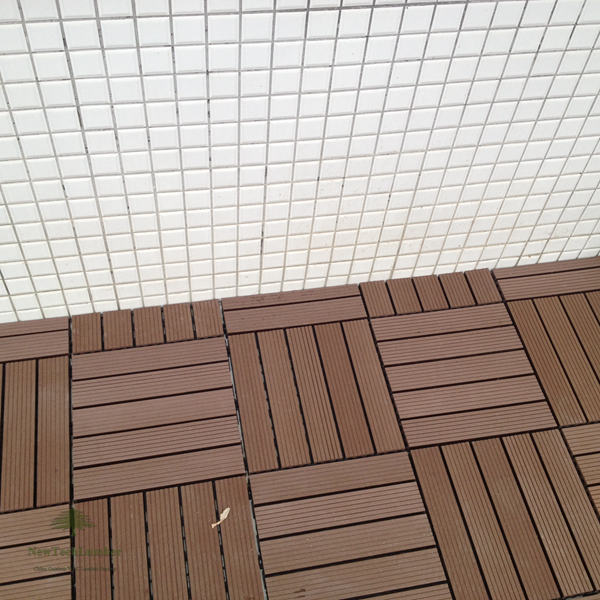
Quality inspection supervisors also check finished composite decking posts through dimensional measurement, impact testing, load evaluation, and weather resistance assessments. Detailed inspection reports support traceability and provide confidence for international customers. Production management teams coordinate extrusion schedules, packaging requirements, and shipping preparation to ensure every order reaches overseas markets according to agreed specifications.
Global Delivery Preparation for WPC Factory Operations
International delivery performance depends on more than manufacturing capability. Packaging engineers design protective solutions that prevent scratches, deformation, and moisture damage during storage and transport. After-sales service engineers collect customer feedback and provide technical support for installation teams, helping factories improve future production standards. Close cooperation between design, production, inspection, and export departments creates a complete quality management system.
For WPC factory owners and industry professionals, continuous improvement in extrusion technology remains essential. Advances in material formulation, automation, mould development, and production monitoring allow manufacturers to supply reliable composite decking posts for residential, commercial, and landscape projects worldwide. Stable processes, accurate engineering control, and disciplined quality management create the foundation for long term international business relationships.