
Composite Decking Joist Span Trends Across International Markets
As a WPC extrusion technology engineer, I see composite decking joist span requirements changing with regional construction practices, climate conditions, and installer expectations. European markets often focus on long service life, thermal movement control, and compliance with detailed building standards, while North American projects commonly require higher load performance for residential and commercial outdoor areas. In Asia, the demand for lightweight installation, efficient production, and adaptable designs continues to influence board and joist systems. These differences directly affect WPC formula selection, extrusion parameters, and final decking performance.
Composite decking is not created by simply mixing wood and plastic together. A reliable product begins with controlled raw material preparation. Wood flour moisture content, polymer quality, additives, pigments, and coupling agents must be measured accurately before production. The formula determines strength, expansion behaviour, surface appearance, and the recommended joist spacing. Engineers studying composite decking joist span trends must evaluate both the finished board structure and the internal material characteristics that support long term outdoor use.
WPC Material Mixing and Pelletising Process
The production process starts with high speed mixing, where wood fibre and polymer materials are combined with stabilisers, lubricants, impact modifiers, and colour systems. Temperature, mixing time, and feeding speed require careful control because uneven dispersion can create weak points inside the decking profile. Excess moisture in wood flour may generate bubbles during extrusion, while insufficient additive distribution can reduce weather resistance and surface quality.
After mixing, many manufacturers use pelletising equipment to create consistent WPC compounds. Pellet size uniformity improves feeding accuracy during extrusion and helps maintain stable output rates. For international decking projects, consistent pellets are especially important because factories need repeatable production results across different board lengths, colours, and profile designs. Quality control teams monitor density, moisture levels, and mechanical properties before the material enters the extrusion line.
Extrusion Temperature Control and Mold Engineering
The extrusion stage transforms prepared WPC material into finished decking profiles through controlled heating and pressure. Each production zone has a specific temperature range because wood components can degrade if exposed to excessive heat. Engineers adjust barrel temperatures, screw speed, and pressure settings to achieve smooth melting, stable flow, and proper fibre distribution. Poor temperature control may lead to rough surfaces, internal cracks, or inconsistent dimensions.
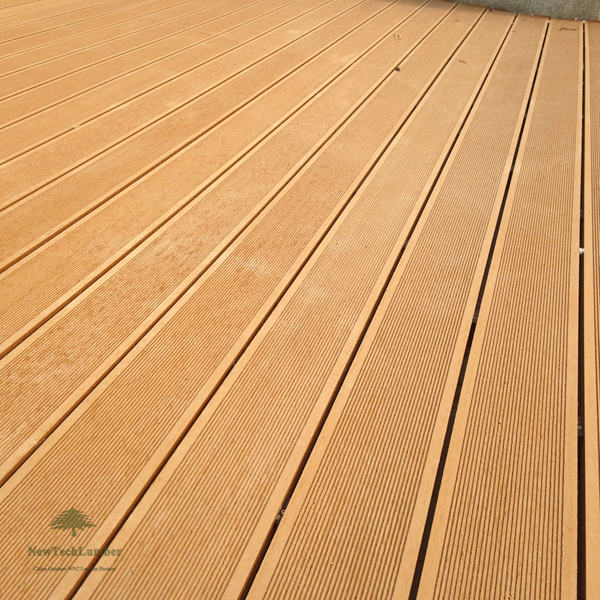
Mold design is another major factor affecting decking quality and installation performance. A well-designed extrusion mold controls material flow across hollow chambers, reinforcement ribs, and surface structures. Different international markets require different profiles because joist span expectations vary with local loading requirements and installation habits. Engineers optimise wall thickness, internal support structures, and cooling behaviour to produce boards that maintain strength while reducing unnecessary material consumption.
Cooling Calibration and Surface Finishing Technologies
After leaving the extrusion mold, the hot WPC profile enters a cooling calibration system. Vacuum calibration tables maintain precise dimensions while cooling tanks gradually reduce temperature to prevent deformation. Uneven cooling can cause twisting, shrinkage differences, or fitting problems during installation. Stable calibration is essential for decking systems that must achieve accurate alignment over larger outdoor areas.
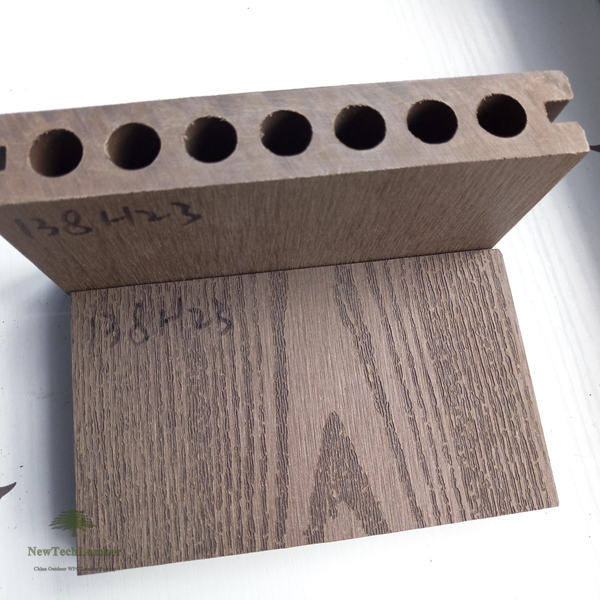
Surface treatment processes improve both appearance and functional performance. Brushing creates realistic wood grain textures, embossing adds decorative depth, and sanding removes surface irregularities. Some manufacturers apply co extrusion layers that provide enhanced colour stability, stain resistance, and protection against moisture penetration. These technologies allow composite decking products to meet demanding outdoor conditions in coastal regions, commercial developments, and residential landscapes.
Common WPC Production Problems and Market Adaptation
WPC factories regularly manage challenges such as uneven colour, poor bonding, warping, surface defects, and unstable extrusion output. These problems usually come from incorrect material ratios, inconsistent temperature settings, unsuitable screw designs, or insufficient calibration control. Experienced engineers analyse production data, inspect samples, and adjust processing conditions to maintain reliable quality.
The future direction of composite decking joist span design will continue to be influenced by international construction trends. Manufacturers are developing stronger profiles, improved formulas, and more efficient extrusion methods to meet changing project requirements. By connecting raw material science with precise manufacturing control, WPC producers can create decking systems that support diverse installation methods while maintaining durability, visual quality, and dependable outdoor performance.