
Composite Decking Cost Starts Before Installation
For architects and landscape designers, composite deck vs wood deck cost should be assessed across the complete project rather than by comparing the purchase price of boards alone. WPC decking can carry a higher initial material price than standard timber, yet its resistance to moisture, insects, splitting and surface decay can reduce maintenance requirements over a longer service period. For outdoor terraces, pool surrounds, garden walkways and hospitality spaces, this distinction affects both the design specification and the client’s long term operating budget.
Export packaging adds another cost factor that is often overlooked during material selection. WPC boards must arrive at the project site with their surface finish, edges and dimensions protected. Good packaging design reduces damage caused by handling, stacking and international transport. Architects working with overseas manufacturers should therefore assess board quality, packaging standards, container utilisation and replacement procedures together, particularly for large landscape schemes where a small percentage of damaged material can create installation delays.
Wood and WPC Require Different Cost Assumptions
Timber decking can appear economical at the quotation stage, especially where locally available softwood is used. However, the installed cost can increase through staining, sealing, sanding, board replacement and more frequent inspections. Timber species also respond differently to rainfall, ultraviolet exposure and changes in humidity. In commercial landscapes, these maintenance activities can create labour costs as well as temporary restrictions on access.
WPC decking is manufactured from wood fibre and polymer, with additives and processing methods selected for outdoor performance. The formulation influences density, colour stability, water resistance and dimensional behaviour. For a landscape consultant, the relevant comparison is therefore not simply composite versus timber, but the expected service conditions of each specified material. A premium WPC profile with suitable drainage and a proven outdoor formulation may be more appropriate than a low cost composite product for a heavily used public terrace.
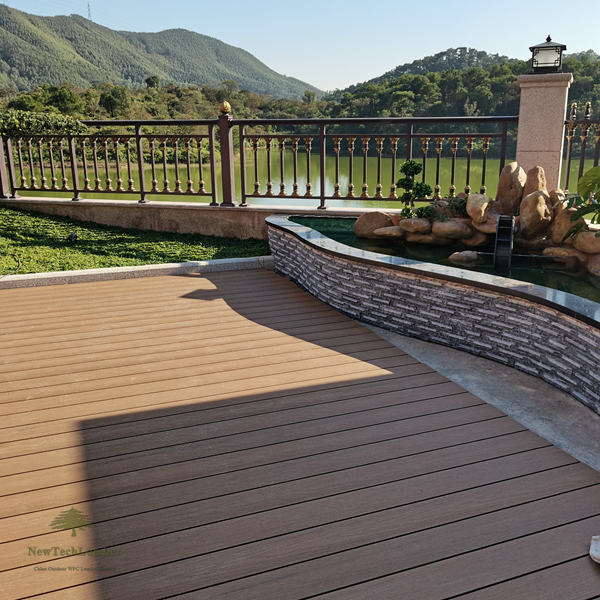
Export Packaging Affects Delivered Decking Value
International projects require attention to the delivered condition of the decking. Export packaging commonly uses protective film, corner protection, reinforced cartons, pallets or steel strapping, depending on the board profile and destination. Packaging should prevent abrasion between boards while allowing stable stacking inside a container. Excessive packaging can increase freight volume and disposal requirements, whereas inadequate protection can lead to scratched surfaces, crushed edges or warped profiles before installation begins.
Container loading should be considered during the specification stage. Board lengths, pallet dimensions and packaging configuration influence how efficiently material can be shipped. For a project with a fixed installation programme, architects and procurement teams should also confirm whether replacement boards can be supplied in the same colour and production batch. A packaging system designed around accurate quantity calculations can reduce both transport waste and the risk of site shortages.
Design Details Influence Long Term WPC Performance
Material selection should match the environmental and structural demands of the site. Around swimming pools, drainage and slip resistance require careful consideration. In coastal landscapes, salt exposure and persistent humidity make material stability especially important. In areas with strong sunlight, colour retention and thermal movement should be reviewed alongside the manufacturer’s installation guidance.
Substructure design is equally important. Joist spacing, fixing systems, expansion gaps and ventilation beneath the boards all affect finished performance. WPC decking should not be installed as though it were conventional timber because composite profiles can have different thermal expansion characteristics. Correct spacing allows controlled movement and helps prevent stress around clips and fasteners. For architects, these details belong in the construction specification rather than being left entirely to the installer.
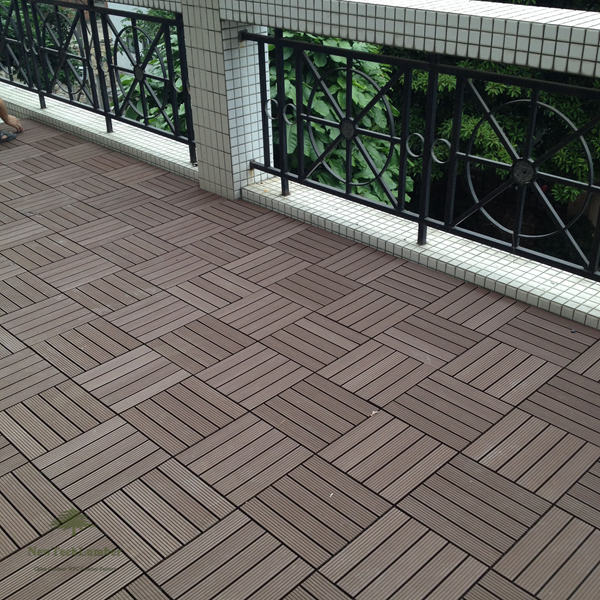
Cost Planning for Landscape and Architectural Projects
A practical composite deck vs wood deck cost assessment should include boards, substructure, fasteners, labour, finishing treatments, packaging, freight, import related charges and expected maintenance. Comparing only the price per square metre can hide significant differences between materials. A project with difficult access or high labour costs may benefit more from a low maintenance decking system than a project where timber is inexpensive and routine treatment is readily available.
For export projects, buyers should request technical data, packaging dimensions, loading quantities and quality inspection standards before placing an order. Samples should be checked for colour, texture, dimensions and surface consistency, while production specifications should confirm acceptable tolerances. This approach gives landscape designers a clearer basis for balancing appearance, durability, logistics and lifecycle expenditure.
WPC Selection for Durable Outdoor Environments
Well specified WPC decking can support outdoor environments where consistent appearance and reduced routine maintenance are important. Its suitability depends on formulation, profile construction, installation conditions and the quality controls applied during extrusion. Architects should select products with documented outdoor performance rather than treating all composite decking as equivalent.
For international supply, packaging quality becomes part of product quality because the finished material must survive the journey from factory to construction site. When material specification, export protection, container planning and installation requirements are assessed together, WPC decking can provide a predictable solution for terraces, roof gardens, pool decks, hospitality areas and landscaped public spaces. The strongest project specification is one that considers both the board installed in the landscape and the board as it travels through the supply chain.