
Composite Cladding Wall Applications in Outdoor Architecture
As a WPC extrusion technology engineer, I have worked with composite cladding wall production from raw material preparation to finished outdoor installation. These wall systems are increasingly used in residential façades, commercial buildings, garden structures, resorts and landscape projects because they combine wood appearance with improved resistance to moisture, insects and outdoor exposure. The performance of each panel depends on precise control throughout the extrusion process rather than only the final surface design.
Outdoor projects place different demands on WPC cladding. A coastal building requires stronger resistance against humidity and salt exposure, while a private garden renovation may focus more on texture, colour stability and easy maintenance. Engineers must balance formula design, extrusion settings and mould structure to create profiles that maintain dimensional stability after years of temperature changes.
Material Mixing and Pellet Production Control
The production process begins with accurate raw material preparation. A typical WPC formula contains wood flour, polymer resin, coupling agents, stabilisers, lubricants, pigments and processing additives. The moisture content of wood powder must be controlled carefully because excessive moisture can create bubbles, weak bonding and uneven surfaces during extrusion.
After high-speed mixing, the compound enters the pelletizing stage. Pellet production improves feeding consistency and helps extrusion lines maintain stable output. During this stage, temperature, mixing speed and cooling conditions are adjusted according to the material formula. Poor pellet quality may lead to inconsistent colour, unstable dimensions and surface defects in the final composite cladding wall profiles.
Extrusion Temperature and Mould Design Accuracy
WPC extrusion requires careful temperature management across different barrel zones. The material must become fully plasticised without causing polymer degradation or excessive wood fibre damage. Engineers normally adjust heating zones, screw speed and pressure according to the profile thickness, resin type and production speed. Incorrect temperature settings can create problems such as rough surfaces, internal voids or poor mechanical strength.
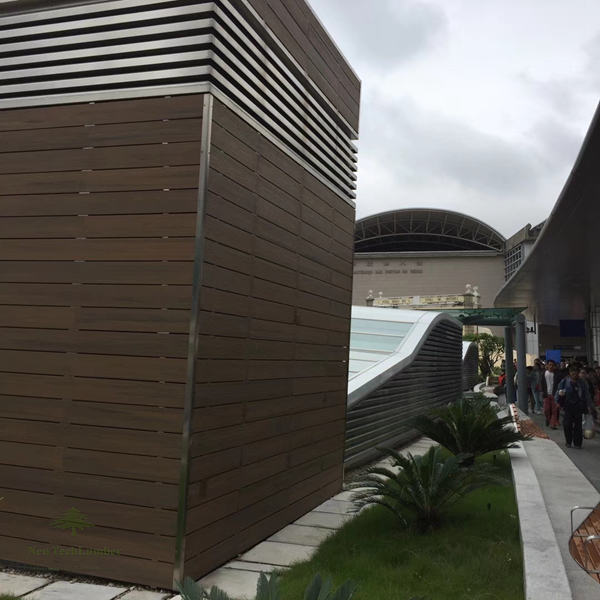
Mould design directly affects the appearance and performance of outdoor cladding panels. A well-developed extrusion die controls material flow so that every section of the profile receives equal pressure. The mould must also consider shrinkage, cooling behaviour and connection methods between panels. Advanced designs often include hidden fastening systems, ventilation spaces and reinforcement structures for larger façade applications.
Cooling Calibration and Surface Treatment Methods
After leaving the extrusion die, the hot profile passes through a cooling calibration system. Vacuum calibration tables and water cooling units shape the WPC profile while reducing deformation. Cooling speed must be balanced because rapid cooling may create stress inside the material, while insufficient cooling can cause bending or inaccurate dimensions.
Surface treatment gives composite cladding wall products their final appearance and additional protection. Common methods include embossing, brushing, sanding, co-extrusion and protective film application. Embossing creates realistic wood grain patterns, while co-extrusion adds a protective outer layer that improves resistance to fading, stains and weather conditions. These processes allow manufacturers to provide customised finishes for different architectural styles.
Production Problems and Quality Improvement
WPC extrusion lines can experience several common production problems. Colour variation is often related to uneven mixing, unstable temperature control or inconsistent raw materials. Warping may result from incorrect cooling calibration, uneven internal stress or unsuitable profile design. Surface cracking can occur when the formula lacks flexibility or when extrusion conditions are not properly adjusted.
Quality inspection teams usually check density, impact strength, dimensional accuracy, water absorption and colour stability before products reach customers. Engineers also monitor screw pressure, output speed and equipment wear during manufacturing. Continuous process improvement helps factories produce reliable composite cladding wall solutions for international outdoor construction markets.
Applications Across Diverse Outdoor Projects
Composite cladding wall systems are applied across many outdoor environments, including villa exteriors, apartment balconies, office buildings, restaurants, parks and landscape installations. Designers often select WPC because it provides a natural timber appearance while reducing maintenance requirements compared with traditional wood cladding. For architects and material consultants, profile shape, installation method and colour selection are important factors in matching the building concept.
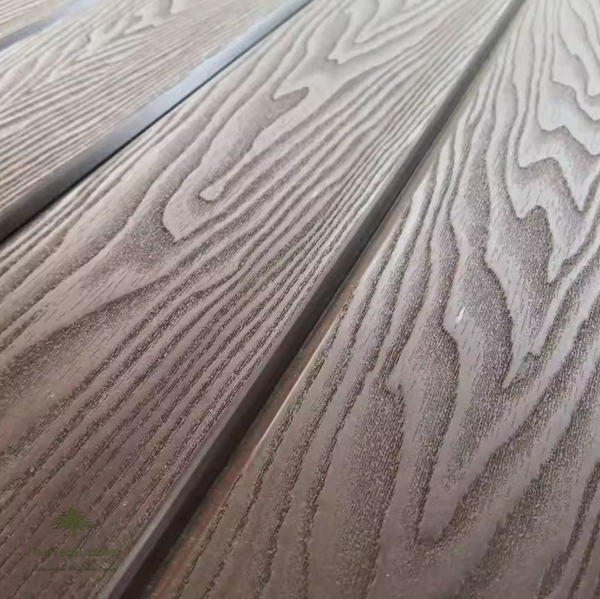
From an engineering perspective, successful WPC projects depend on cooperation between formula developers, extrusion technicians, mould designers, quality supervisors and installation teams. Every stage, from material mixing to final packaging, influences product performance. Careful extrusion management allows manufacturers to deliver customised outdoor wall solutions that meet the practical requirements of global construction projects.