
Composite Decking Boards: Choose the Perfect Size and Style for Your Deck
Composite decking boards have become a popular choice for homeowners looking to enhance their outdoor living spaces. This popularity stems not only from their aesthetic appeal but also from the manufacturing processes that ensure durability, sustainability, and low maintenance. Understanding the production techniques involved in creating composite decking is essential for making an informed choice regarding size and style.
The primary materials used in composite decking are wood fibers and plastic. The wood fibers often come from recycled wood products, while the plastic is typically sourced from recycled materials, including post-consumer waste like bottles and bags. This combination not only reduces the reliance on virgin materials but also contributes to environmental sustainability. The process begins with the careful selection of these raw materials, ensuring that they meet specific quality standards before being blended.
Once the materials are selected, they undergo a process known as compounding. During compounding, the wood fibers are mixed with plastic in a controlled environment. This mixture often includes additives that enhance the performance of the decking boards, such as UV stabilizers and color pigments. The compounding process is crucial because it determines the final characteristics of the composite decking, including its strength, flexibility, and resistance to fading or warping.
After compounding, the mixture is subjected to a process called extrusion. In this stage, the blended materials are forced through a die to create continuous lengths of decking boards. The extrusion process allows for precise control over the dimensions of the boards, which can be customized to meet various design specifications. Homeowners can choose from a variety of sizes, such as standard widths and lengths, or opt for more unique dimensions that fit their specific decking layout.
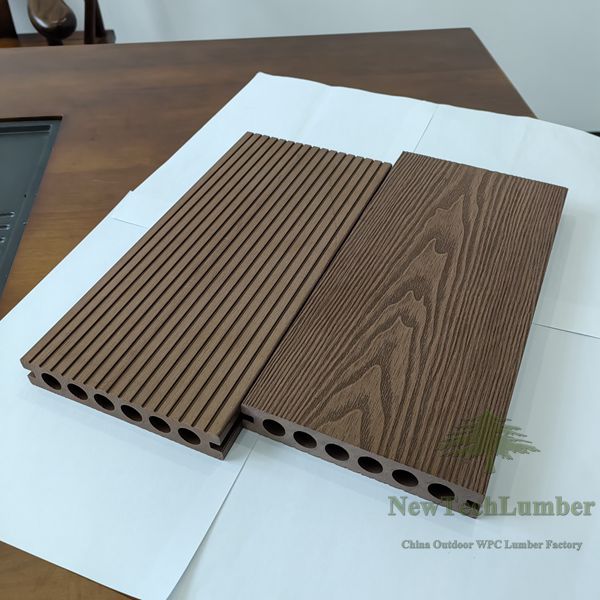
The cooling and cutting of the extruded boards is another critical phase in the production process. As the boards exit the extruder, they are cooled down to solidify their shape. This is often done using water baths or air cooling systems. Once cooled, the boards are cut to the desired lengths, ready for packaging and distribution. The ability to customize the lengths of the boards allows homeowners to minimize waste during installation, making composite decking an efficient choice for deck construction.
A significant advantage of composite decking is its ability to mimic the look of natural wood while offering superior durability. This is achieved through a process called co-extrusion, where an outer layer of high-performance plastic is applied over the core of wood-plastic composite. This outer layer provides an additional level of protection against moisture, mold, and UV rays. As a result, composite decking boards are less likely to splinter or fade over time, making them an attractive and long-lasting option for outdoor spaces.
Homeowners often have a wide range of styles and colors to choose from when selecting composite decking. The manufacturing process allows for the incorporation of various colorants and textures, providing versatility in design. Some manufacturers offer products that feature a wood-grain finish, while others may provide a more modern, sleek surface. This variety enables homeowners to select a style that complements their home and personal taste.

Moreover, the production of composite decking also adheres to strict environmental regulations. Many manufacturers implement sustainable practices throughout their processes, including recycling scrap materials generated during production. This commitment to sustainability not only helps reduce waste but also appeals to environmentally conscious consumers. By choosing composite decking made from recycled materials, homeowners contribute to a more sustainable future.
Maintenance is another factor that makes composite decking an appealing choice. Unlike traditional wood decking, which requires regular staining and sealing, composite boards require minimal upkeep. The manufacturing process ensures that the boards are resistant to moisture and pests, significantly reducing the need for chemical treatments. Homeowners can enjoy their decks without the burden of extensive maintenance, allowing them to spend more time relaxing and entertaining outdoors.
When considering composite decking, it is essential to think about the size and style that best suit your needs. The versatility in dimensions allows for creative designs, whether you prefer a spacious area for gatherings or intimate nooks for relaxation. Additionally, the wide range of colors and textures means you can select a look that enhances your home’s exterior.
In choosing the perfect composite decking, it is beneficial to understand the intricacies of the production process. From the selection of materials to the final stages of extrusion and finishing, each step plays a crucial role in determining the quality and performance of the decking boards. By selecting composite decking, homeowners invest in a product that combines beauty, durability, and sustainability, making it an ideal choice for any outdoor living space. The ability to customize both size and style further ensures that your deck will not only meet your functional needs but also reflect your personal aesthetic.