
WPC Raw Material Preparation and Formula Control
As a WPC extrusion technology engineer in Guangdong, I work closely with material selection, formulation adjustment, and production trials for outdoor composite products. The manufacturing process of composite deck tiles starts with precise control of wood flour, polymers, additives, pigments, and processing agents. The wood component must have stable moisture content and particle size because inconsistent raw materials can create weak areas, surface defects, and dimensional changes after extrusion.
The formula development stage combines recycled or virgin polymers such as PE with treated wood fibres. Coupling agents are added to improve bonding between the hydrophilic wood content and hydrophobic plastic matrix. Lubricants, UV stabilisers, and anti ageing additives are also adjusted according to the expected outdoor environment. After laboratory testing, the materials are mixed at controlled temperatures before moving to pelletising. Uniform pellets provide better feeding performance and help maintain stable extrusion output during long production runs.
Pelletising and Extrusion Temperature Management
After mixing, the WPC compound enters the pelletising system where the material is transformed into consistent granules. The pellet size, density, and cooling method influence feeding accuracy in the extrusion line. Poor pellet quality can lead to unstable pressure, uneven colour distribution, and inconsistent product strength.
During extrusion, temperature control is one of the most important technical factors. The barrel zones must be adjusted according to the polymer melting behaviour and wood fibre protection requirements. Excessive heat can burn the wood content, causing dark marks and unpleasant odours, while insufficient heat prevents complete plasticisation. A Guangdong WPC factory usually monitors barrel temperature, screw speed, melt pressure, and output rate together to maintain reliable production of composite deck tiles with consistent mechanical performance.
Mold Design and Profile Extrusion Accuracy
The extrusion mould determines the final shape, thickness, internal structure, and surface quality of WPC products. For outdoor decking applications, mould design requires careful consideration of material flow balance, cooling shrinkage, and pressure distribution. A well designed mould allows the compound to fill every section of the profile evenly, reducing deformation and improving strength.
Engineers normally analyse the position of ribs, hollow chambers, and fixing structures before manufacturing the mould. These details affect load capacity, installation efficiency, and material usage. Incorrect mould settings may create problems such as uneven wall thickness, bending profiles, or difficult assembly during installation. Regular mould maintenance and polishing are necessary to keep extrusion accuracy stable throughout production.
Cooling Calibration and Surface Treatment Technology
After leaving the extrusion die, the hot WPC profile enters the cooling calibration system. Vacuum calibration tables control the dimensions while water cooling gradually reduces the material temperature. Cooling speed must be balanced because rapid cooling may create internal stress, while slow cooling can affect productivity and shape stability.
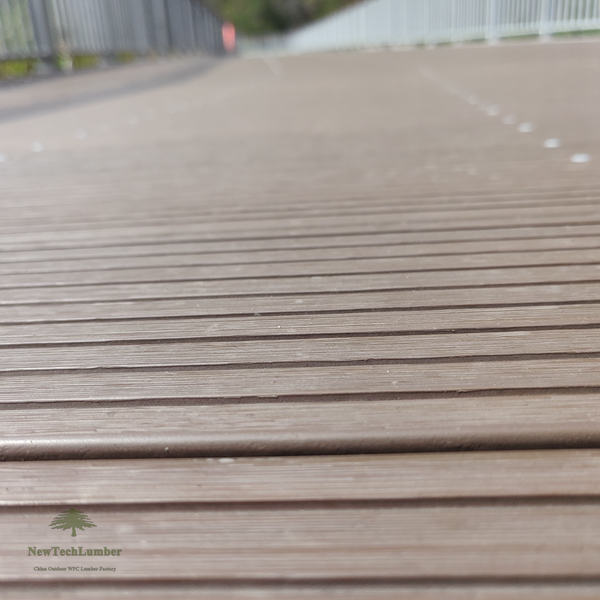
Surface treatment gives composite deck tiles their final appearance and outdoor performance. Common processes include embossing, sanding, brushing, co extrusion, and colour enhancement. Embossed wood grain surfaces improve visual appeal and provide additional slip resistance. Co extrusion technology adds a protective outer layer that improves resistance against stains, moisture, and fading. The selected treatment depends on market requirements, climate conditions, and customer application standards.
Common WPC Production Problems and Quality Improvement
WPC production requires continuous monitoring because small process changes can influence final product quality. Common extrusion problems include surface cracking, colour differences, bubbles, poor bonding, warping, and low impact strength. Surface cracks are often related to incorrect temperature settings, insufficient lubrication, or unstable material flow. Bubbles may appear when raw materials contain excessive moisture or when ventilation settings are not properly adjusted.
Quality inspection teams in professional WPC factories check dimensions, density, water absorption, mechanical strength, colour consistency, and weather resistance. Cooperation between raw material quality control engineers, extrusion technicians, and product designers helps identify the source of defects quickly. For international customers, stable production processes are essential because composite deck tiles must meet different climate requirements and installation expectations across global markets. A complete understanding of extrusion technology allows manufacturers to deliver reliable outdoor WPC solutions for residential, commercial, and landscape projects.
WPC Manufacturing Experience for Global Applications
From my experience managing extrusion development, successful WPC production depends on the connection between formula engineering, equipment adjustment, mould precision, and quality management. Each stage influences the next, from the first material inspection to the final surface inspection before packaging and export.
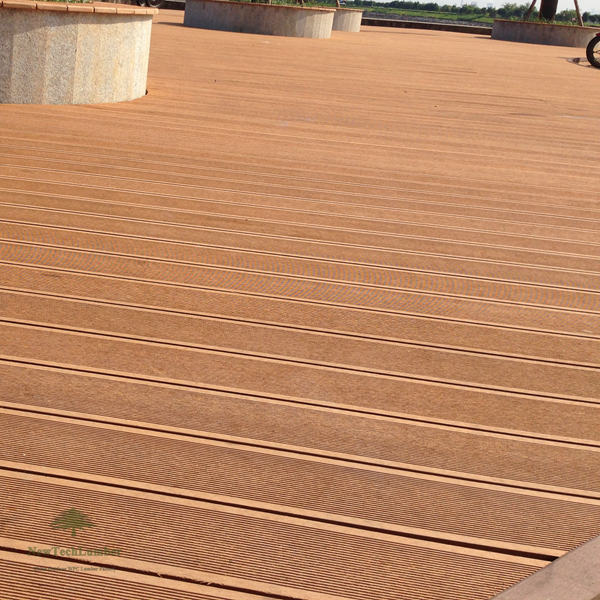
Guangdong WPC manufacturers continue improving production methods through advanced extrusion equipment, customised formulas, and application focused design. By combining technical knowledge with practical installation feedback, manufacturers can create durable composite products suitable for decks, gardens, balconies, and public outdoor spaces. The result is a controlled manufacturing process that supports long term performance and consistent supply for international buyers.