
Composite Deck Lighting for Contemporary Outdoor Spaces
Composite deck lighting has become an important consideration in the specification of modern outdoor areas, particularly where decking must support both architectural appearance and practical evening use. From private terraces and garden entertaining zones to hotel patios, restaurant courtyards and commercial landscapes, lighting can define circulation routes, highlight changes in level and extend the useful hours of an external space. As an architectural material consultant, I would assess the lighting system alongside the decking material rather than treating it as a separate finishing detail. Outdoor WPC, natural wood, traditional timber and aluminium each respond differently to integrated lighting, fixing methods, moisture and long term maintenance.
Outdoor WPC is particularly suitable for applications where a consistent appearance is required around recessed lights, stair lighting and perimeter illumination. Its manufactured composition provides relatively uniform dimensions and surface characteristics, which can simplify accurate cutting and positioning during installation. This is valuable for commercial projects where multiple boards, steps and illuminated sections need to maintain a consistent visual line. Natural wood can deliver a warmer and more varied appearance, but differences in grain, moisture content and movement can make precise lighting installation more demanding.
Outdoor WPC Compared with Natural Wood
Natural wood remains attractive for premium residential landscapes because of its authentic texture and ability to age naturally. However, exposed timber requires regular inspection and maintenance, especially in wet or highly exposed locations. Depending on the species and local climate, staining, sealing, sanding, cleaning and replacement of damaged sections may become recurring costs. Lighting components installed into timber also need careful detailing because repeated moisture movement can affect joints and openings around fittings.
WPC decking generally requires less routine surface treatment than natural wood. Quality boards are designed for outdoor exposure and can be cleaned periodically to remove dirt, leaves and organic deposits. This does not make WPC maintenance free, since drainage, fasteners, substructure and electrical connections still require inspection. For projects using composite deck lighting, the reduced need for surface coatings can also help preserve a consistent appearance around illuminated areas over the service life of the installation.
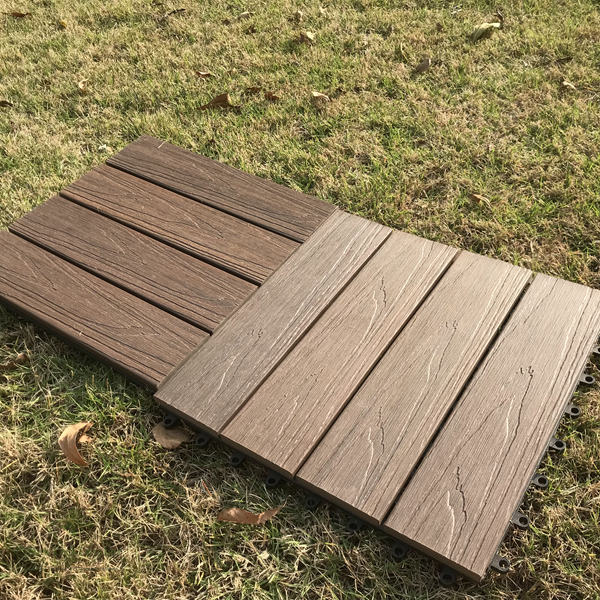
WPC and Traditional Timber Lifecycle Costs
Traditional timber can have a lower initial material price in some markets, but purchase cost alone does not represent its lifecycle cost. Labour for staining, sealing, cleaning and replacing deteriorated boards can become significant across a large deck. For hospitality venues and commercial properties, maintenance can also create indirect costs because sections may need to be isolated while work is carried out. WPC often has a higher initial specification cost than basic timber, yet its lower routine maintenance requirement can improve cost predictability over a longer service period.
The substructure should be included in any lifecycle assessment. Poor ventilation, inadequate drainage or unsuitable spacing beneath either timber or WPC can shorten service life. Lighting adds another technical layer, with transformers, cables, connectors and access points needing protection from moisture. A well designed system should allow individual fittings to be replaced without dismantling large sections of decking, reducing future labour costs and disruption.
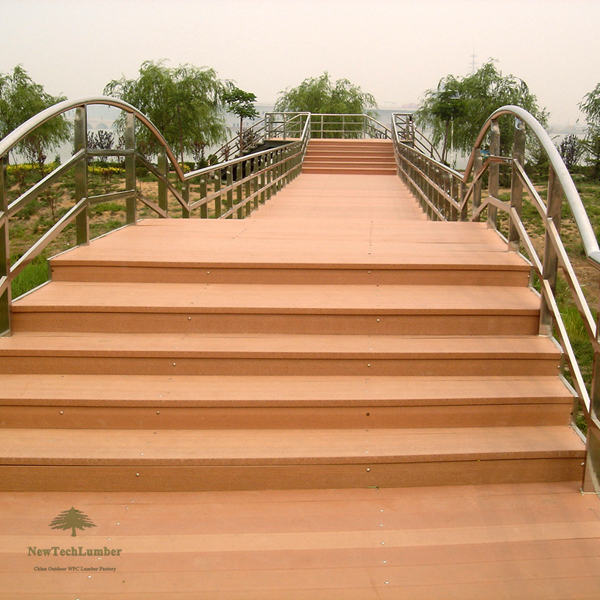
Composite Deck Lighting and Aluminium Decking
Aluminium decking offers excellent dimensional stability and resistance to many environmental conditions, making it useful for demanding commercial and coastal applications. It can also support a clean contemporary appearance, particularly in projects based on metal architecture. Its disadvantages can include higher material cost, a more industrial visual character and different thermal behaviour from composite boards. Footfall noise and surface temperature may also influence material selection depending on the project.
WPC provides a more timber-like appearance while offering a broad range of colours and profiles. For composite deck lighting, board profiles can accommodate recessed fittings, edge illumination and stair lights without losing the visual character expected from an outdoor living space. Other exterior materials, including concrete, stone and ceramic paving, can provide excellent durability but may require different installation details for concealed cables and replaceable lighting units.
Lighting Details for Residential and Commercial Applications
Residential projects often use low level lighting to define steps, seating areas, pathways and deck boundaries without producing excessive glare. Recessed round lights can create small points of illumination, while linear systems can emphasise the geometry of a terrace. In hospitality and commercial environments, lighting design normally requires greater attention to pedestrian movement, cleaning access, electrical protection and consistent illumination across larger areas.
Material selection should therefore consider the complete installation rather than the board alone. WPC thickness, joist spacing, access for wiring, drainage and the dimensions of lighting fittings all affect installation quality. Architects and contractors should also confirm electrical protection requirements, particularly where lighting is exposed to rain, irrigation systems or frequent cleaning. A coordinated approach between the WPC installation technician, electrical contractor and design team reduces the likelihood of later modifications.
Specification Priorities for Long Term Outdoor Performance
For an architectural project, the strongest specification combines appearance, structural performance, maintenance requirements and expected use. Natural wood may be selected where authentic grain and traditional character justify ongoing care. Aluminium can suit highly contemporary or demanding environments where dimensional stability is a priority. Traditional timber remains practical for cost sensitive applications, provided its exposure and maintenance requirements are properly addressed. WPC occupies a useful middle position, offering a familiar timber aesthetic with comparatively predictable maintenance.
Composite deck lighting should be specified at the same design stage as the decking system, with attention to board dimensions, fixing access, drainage and replacement procedures. When these details are coordinated from the beginning, illuminated WPC decks can support residential gardens, rooftop terraces, hospitality spaces and public landscapes while maintaining a controlled appearance and manageable lifecycle costs.