
Factory Testing Standards for Wood Plastic Fence Panels
Before outdoor WPC products reach construction sites, manufacturers must complete a detailed testing process to confirm performance, safety, and long-term reliability. Wood plastic fence panels are exposed to changing weather conditions, including rain, sunlight, temperature fluctuations, and moisture. Factory delivery standards therefore focus on material consistency, structural strength, appearance quality, and resistance against environmental stress.
Quality control teams examine every production stage, from raw material preparation to finished panel inspection. The process usually includes checking wood fibre content, recycled plastic quality, additives, colour stability, and extrusion accuracy. These inspections help ensure that every batch meets technical requirements and provides dependable performance for residential, commercial, and landscape applications.
Material Testing and Environmental Benefits of WPC Fencing
Outdoor WPC is widely recognised as an environmentally friendly building material because it combines recycled polymers with renewable wood resources. During manufacturing, recycled plastic reduces the demand for newly produced plastic materials, helping to lower waste entering landfill systems. The wood component also decreases dependence on traditional timber harvesting, supporting more responsible use of forest resources.
For sustainable building projects, the environmental advantages of wood plastic fence panels extend beyond their recycled content. The production process uses wood fibres that may come from industrial by-products, giving value to materials that might otherwise be discarded. Manufacturers test the ratio of wood and plastic carefully because the balance affects strength, moisture resistance, and overall product stability.
Mechanical Performance and Weather Resistance Checks
Factory laboratories conduct mechanical tests to measure whether WPC fencing can withstand daily outdoor conditions. Impact resistance testing evaluates how panels respond to accidental contact, while bending and load tests confirm that the boards maintain their shape under pressure. These results help engineers select suitable formulations for different climates and installation environments.
Weather resistance is another essential inspection area. Samples are tested under accelerated ultraviolet exposure to examine colour retention and surface ageing. Water absorption tests measure how effectively the material prevents moisture penetration, reducing the risk of swelling, cracking, or deformation. These properties make WPC a practical alternative to traditional timber fencing, especially in areas with high humidity or frequent rainfall.
Surface Quality, Dimensions, and Production Accuracy
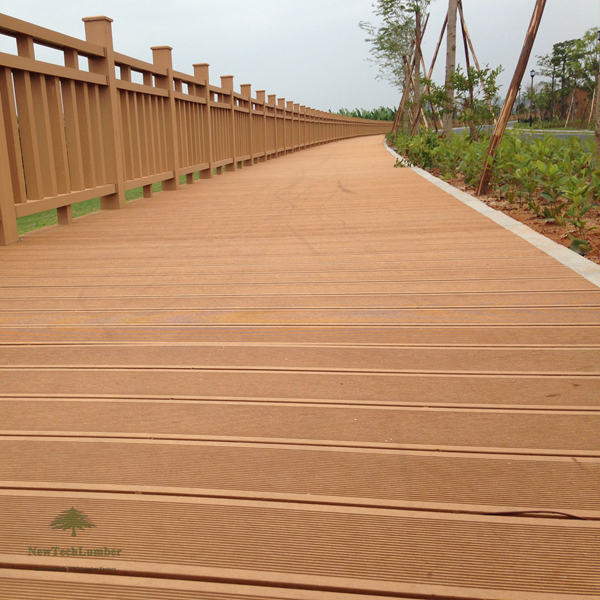
Appearance inspections are completed before products leave the factory because consistent visual quality is important for architectural projects. Inspectors check surface texture, colour uniformity, edge finishing, and any visible defects. Modern WPC manufacturing can create realistic wood grain patterns while maintaining the durability required for outdoor use.
Dimensional accuracy is also carefully controlled during extrusion. Engineers measure panel thickness, width, length, and connection profiles to ensure compatibility with installation systems. Precise manufacturing reduces difficulties during construction and supports faster installation for contractors, landscape specialists, and building professionals.
Durability and Low Maintenance Performance
The long service life of WPC fencing contributes to its sustainability advantages. Unlike untreated timber, WPC does not require regular painting, staining, or chemical preservation treatments to maintain its appearance. Factory testing confirms that the material can continue performing effectively with minimal maintenance after installation.
This low-maintenance feature reduces the consumption of additional coatings, cleaning products, and replacement materials over the product lifespan. For property developers and architects seeking sustainable solutions, wood plastic fence panels offer a combination of recycled material benefits, reduced resource consumption, and dependable outdoor performance.
Quality Assurance Before Global Delivery
International customers often require strict documentation before accepting WPC products, particularly for large construction projects and export orders. Manufacturers may provide test reports covering strength, weather resistance, chemical safety, and environmental performance. These records allow buyers, engineers, and quality supervisors to verify that products match required standards.
A professional factory inspection system protects both manufacturers and customers by reducing defects and maintaining consistent product quality. Through careful material selection, laboratory testing, and final production checks, outdoor WPC fencing can meet the expectations of sustainable building specialists and global construction markets while delivering reliable performance for many years.