
WPC Extrusion Process for Reliable Composite Deck Alternatives
As a WPC extrusion technology engineer, I view outdoor composite deck alternatives as the result of controlled manufacturing rather than simple material substitution. A professional WPC production line begins with careful raw material selection, where wood fibre, polymers, additives, pigments, and processing agents are tested before entering the formulation stage. Moisture content, particle size, polymer quality, and additive compatibility directly influence board strength, colour stability, and outdoor durability.
The material mixing process requires precise proportion control. Wood powder is dried to reduce moisture-related defects, then blended with HDPE, PVC, or other suitable polymers together with stabilisers, lubricants, and weather-resistant additives. After uniform mixing, the compound is commonly pelletised to create consistent feedstock for extrusion. Stable pellets improve feeding accuracy and help maintain consistent pressure and temperature during continuous production.
Material Formulation and Extrusion Temperature Control
During extrusion, temperature management determines whether a WPC profile achieves the required mechanical performance and surface quality. The extruder heating zones must be adjusted according to the polymer system, wood content, screw design, and production speed. Excessive heat can cause wood degradation, darkened surfaces, gas formation, and unpleasant odours, while insufficient heat may prevent proper melting and create weak internal bonding.
Professional engineers monitor melt pressure, screw torque, cooling efficiency, and material flow throughout production. A stable extrusion environment allows manufacturers to produce composite deck alternatives with accurate dimensions, reliable load capacity, and consistent appearance. Production teams also analyse common issues such as warping, poor fusion, uneven colour, surface cracks, and internal voids to improve future batches.
Mold Design and Cooling Calibration for Outdoor Profiles
Mold design directly affects the final shape, strength distribution, and installation performance of WPC products. Engineers develop extrusion dies with balanced flow channels so that the molten material fills each section evenly. For decking boards, the internal structure may include hollow chambers or reinforcement ribs designed to reduce weight while maintaining stiffness. Incorrect die pressure balance can lead to uneven thickness, twisting, or dimensional variation.
After leaving the mold, the hot profile enters a cooling calibration system. Vacuum calibration tables and controlled water cooling gradually stabilise the board shape without creating stress inside the material. Temperature differences between the surface and core must be carefully managed because rapid cooling can cause deformation. Accurate calibration ensures that finished boards match installation requirements and fit correctly with clips, fasteners, and supporting structures.
Surface Treatment and Quality Inspection Standards
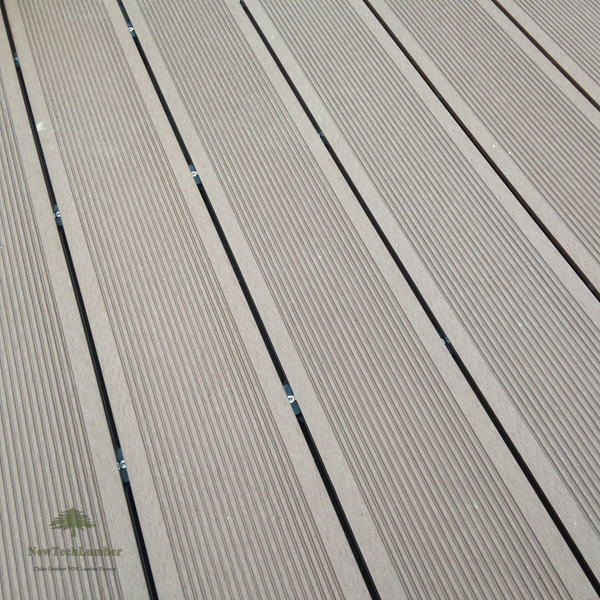
Modern WPC extrusion lines often include surface treatment processes to enhance appearance and weather resistance. Embossing rollers can create realistic wood grain textures, while brushing treatments expose natural fibre patterns and improve visual depth. Co-extrusion technology may also add a protective outer layer that improves resistance against moisture, UV exposure, stains, and colour fading in demanding outdoor environments.
Quality inspection teams evaluate finished profiles through dimensional checks, impact testing, water absorption analysis, colour comparison, and surface examination. Problems such as inconsistent embossing, coating defects, excessive expansion, or weak edge structure must be identified before products reach international customers. These inspection procedures support stable export quality for architects, contractors, distributors, and OEM partners.
Professional Export Packaging Protects Finished WPC Products
Manufacturing quality must continue beyond extrusion because transportation conditions can affect the final customer experience. Professional export packaging engineers design protection systems that prevent damage during container loading, sea freight, and warehouse handling. WPC decking boards are usually separated with protective layers, secured with reinforced wrapping, and packed according to international shipping requirements.
For global markets, packaging design considers humidity changes, long transport periods, impact risks, and efficient container utilisation. Clear product identification, moisture protection, and stable stacking methods help reduce complaints and after-sales problems. Export packaging is an essential part of delivering composite deck alternatives from factory production lines to completed outdoor projects.
Production Experience Supports Long Term WPC Applications
WPC extrusion engineering combines material science, equipment adjustment, mold technology, and quality management into one continuous process. Every stage, from raw material preparation to final packaging, influences how outdoor products perform after installation. Engineers, designers, inspectors, and export specialists must cooperate closely to maintain product consistency across different climates and applications.
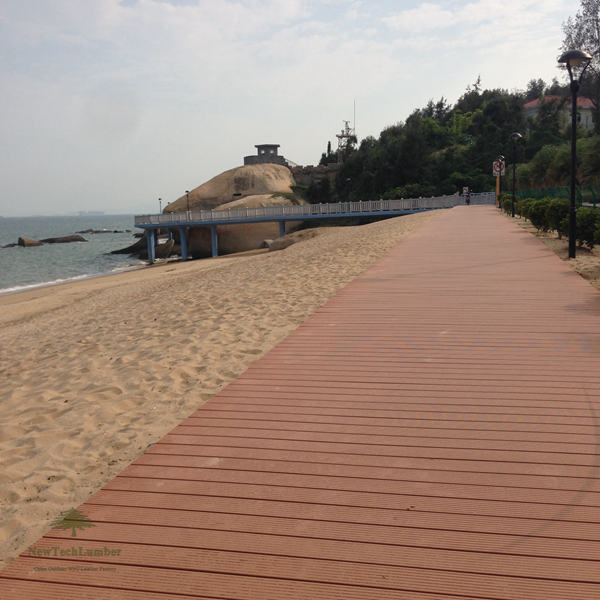
With advanced extrusion control, accurate formulation, and professional packaging systems, manufacturers can provide dependable WPC solutions for residential terraces, commercial spaces, landscaping projects, and architectural applications. Careful production management allows composite deck alternatives to meet international expectations for appearance, performance, and sustainable outdoor construction.