
Quality Control Standards Before WPC Decking Shipment
As a WPC quality inspection supervisor, I oversee the final verification stage before outdoor composite decking products leave the factory. Large WPC factories must control every batch carefully because international customers expect stable dimensions, reliable performance, and consistent appearance across thousands of boards. The inspection process begins with raw material records, production parameters, and sample tracking to ensure that each shipment can be traced back to its manufacturing conditions.
Before approval, inspectors check whether extrusion settings, cooling conditions, surface treatment, and packaging procedures have remained within the required range. A complete quality system does not rely on visual checks alone. Laboratory testing and production line inspections work together to confirm that the decking can perform outdoors under changing weather conditions.
Dimensional Accuracy and Density Testing for Composite Decking
Dimensional accuracy is one of the first physical inspections completed on WPC decking boards. Inspectors measure board length, width, thickness, edge profile, and groove position using calibrated tools. Even small variations can affect installation efficiency, especially for large construction projects where hundreds of boards must fit together precisely. Factories normally record measurement results from different sections of each production batch to identify extrusion fluctuations early.
Density testing provides information about the internal structure and material consistency of the board. A suitable density range helps maintain strength, screw holding ability, and long-term stability. During inspection, samples are weighed and measured to calculate density values. Abnormal results may indicate uneven wood fibre distribution, excessive moisture content, or incorrect plastic and additive ratios during formula development.
Mechanical Performance Checks for Outdoor WPC Products
Impact resistance testing evaluates how well composite decking handles sudden forces from daily use, installation activities, and outdoor environments. Inspectors test samples with controlled impact equipment to measure whether the surface cracks, breaks, or loses structural integrity. This procedure is especially important for commercial projects, public spaces, and high-traffic outdoor areas where boards must withstand repeated pressure.
Bending strength testing measures the load capacity and flexibility of WPC decking. Samples are placed under controlled pressure until the required performance value is reached. The results show whether the board has sufficient reinforcement from the material formula and extrusion process. A reliable bending strength level helps prevent deformation during long-term installation, particularly when joist spacing and project conditions vary.
水吸収と色安定性評価
Outdoor WPC products are exposed to rain, humidity, temperature changes, and sunlight, so water absorption testing is an essential part of shipment approval. Inspectors measure sample weight before and after water exposure to calculate absorption levels. Lower water absorption usually indicates better resistance against swelling, warping, and internal damage. Factories use these results to improve production formulas and maintain stable product quality.
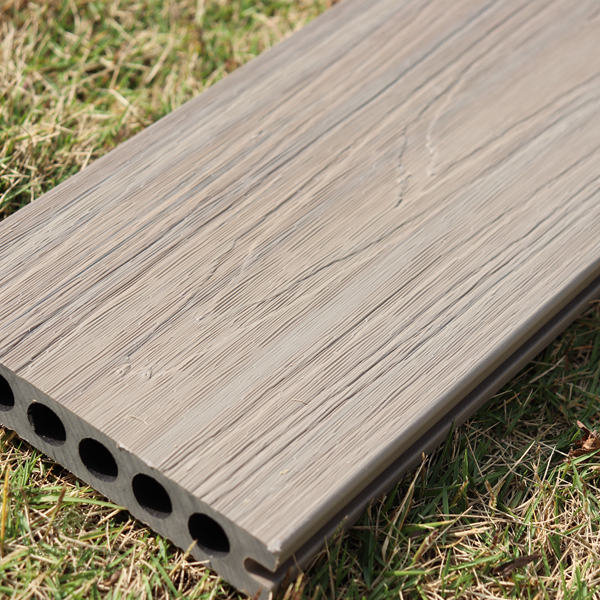
Colour stability inspection focuses on how well decking maintains its appearance after extended ultraviolet exposure. Samples are tested through accelerated weathering equipment that simulates sunlight and outdoor conditions. Inspectors compare colour differences before and after testing to evaluate pigment performance and surface treatment quality. This process supports customers who require a dependable composite decking refresh approach for older outdoor areas where appearance consistency matters.
Appearance Inspection and Final Shipment Approval
Appearance inspection is the final step before packaging. Quality supervisors examine every production batch for surface defects, including scratches, uneven embossing, colour variation, edge damage, and contamination marks. Boards must meet agreed appearance standards because visual quality directly affects customer satisfaction and installation results. Inspectors also verify that protective films, labels, and packaging methods match export requirements.
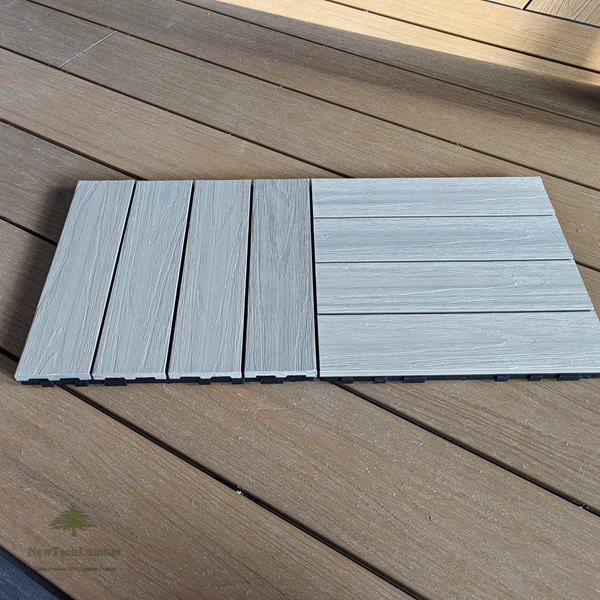
After all inspection data has been reviewed, the quality team decides whether the products are approved for shipment or require further action. Large WPC factories often keep inspection samples from each batch for future reference, helping engineers analyse customer feedback and improve manufacturing processes. A detailed testing system allows manufacturers, designers, installers, and international buyers to work with confidence because every composite decking product has passed measurable quality checks before reaching the market.