
Raw Material Selection for Composite Decking Durability
As a raw material quality control engineer in a professional outdoor WPC factory in Guangdong, China, I evaluate every incoming material batch before it enters production. For composite decking with hidden fasteners, the final performance depends heavily on the balance between wood powder, polymer resin, additives, pigments, and modifiers. A precise formula creates boards that maintain strength, appearance, and dimensional stability under outdoor exposure.
Wood powder provides the natural texture and rigidity of WPC products, but its quality directly affects moisture resistance and mechanical properties. Our factory checks wood powder particle size distribution, moisture content, colour consistency, and impurity levels. Excess moisture can create internal defects during extrusion, while inconsistent particles may reduce surface quality. High-quality wood powder is dried carefully and controlled within a suitable moisture range to support stable bonding with HDPE or PVC polymers.
Polymer Control and Weather Resistance Performance
HDPE and PVC polymers form the protective structure around wood fibres and determine many outdoor performance characteristics. HDPE is commonly selected for decking applications because it offers strong impact resistance, flexibility, and resistance to water absorption. PVC provides good stiffness and surface performance when the formulation requires higher rigidity. During quality inspection, we test polymer melt flow behaviour, density, and compatibility with other raw materials to ensure smooth extrusion.
The polymer ratio must be carefully adjusted according to the product design, climate requirements, and installation conditions. A well-balanced formula prevents excessive expansion, shrinkage, and cracking caused by temperature changes. For international OEM projects, we often modify resin content based on regional weather conditions, including high UV exposure, heavy rainfall, coastal humidity, or freeze-thaw cycles. These adjustments help composite decking with hidden fasteners maintain reliable performance after years of outdoor use.
Additives, Pigments and Formula Modification
Additives are essential components that improve the service life of WPC decking. Lubricants support smooth extrusion and reduce equipment wear, while coupling agents improve the connection between wood fibres and polymers. UV stabilisers reduce colour fading caused by sunlight, and impact modifiers increase resistance against sudden pressure or temperature variation. Each additive is tested through controlled formulation trials before mass production approval.
Pigments influence both appearance and long-term colour stability. Our quality team checks pigment dispersion during extrusion because uneven distribution can create visible colour differences across decking boards. Weathering tests using accelerated UV ageing equipment help measure colour retention and surface changes. For customers requesting customised outdoor WPC solutions, pigment selection is adjusted to match architectural styles, regional preferences, and project specifications.
Factory Inspection Standards for OEM WPC Decking
Quality control in a Guangdong WPC factory requires inspection at every production stage. Incoming raw materials are checked through sampling procedures before storage, while production engineers monitor extrusion temperature, screw speed, cooling conditions, and board dimensions. Finished decking boards are tested for density, hardness, tensile strength, bending performance, water absorption, and dimensional changes.
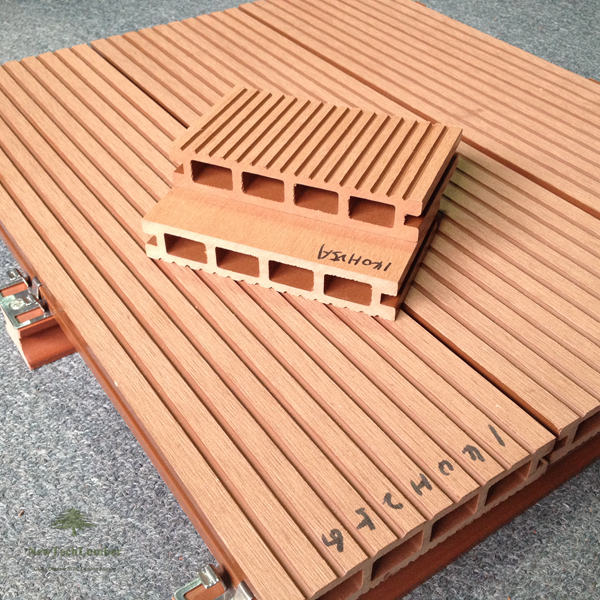
For composite decking with hidden fasteners, additional inspections focus on groove accuracy, surface consistency, and installation compatibility. The hidden fastening system requires precise board profiles because small dimensional errors can affect alignment during construction. We inspect connection areas with measuring tools and conduct installation simulations to confirm that boards fit correctly with clips and accessories. Packaging inspections are also completed to prevent damage during international transport.
OEM Development for Global Outdoor Applications
Different markets require different WPC solutions, so OEM development involves close cooperation between material engineers, product designers, and export teams. A factory must understand the intended application, from residential terraces and commercial walkways to landscape projects and hospitality spaces. Material selection, board structure, embossing patterns, colour options, and packaging methods are developed according to customer requirements.
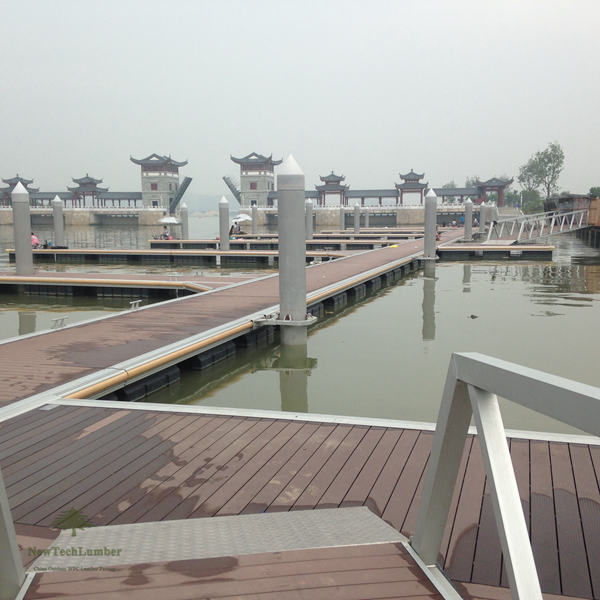
As outdoor building materials continue to evolve, sustainable production and consistent quality remain important factors for global buyers. Responsible factories improve production efficiency, reduce material waste, and select recyclable polymer systems where suitable. By controlling raw materials from the first inspection stage through final product testing, manufacturers can provide dependable WPC decking solutions that meet international expectations for strength, appearance, and long-term outdoor performance.