
Raw Material Selection For Custom Composite Deck Joists
As a raw material quality control engineer in a professional outdoor WPC factory in Guangdong, China, I focus on how each incoming material affects the long-term performance of customised outdoor products. For international OEM projects, composite deck joists must be developed according to climate conditions, installation methods, load requirements, and customer specifications. The foundation of reliable WPC performance starts with accurate control of wood powder, polymer resin, additives, pigments, and functional modifiers.
Wood powder provides the natural appearance and contributes to the stiffness of WPC profiles, but its quality must be carefully managed. We inspect particle size distribution, moisture content, fibre consistency, and impurity levels before production. Excess moisture can create internal defects, reduce bonding strength, and increase the risk of expansion during outdoor exposure. A controlled wood powder ratio helps achieve the correct balance between natural texture, dimensional stability, and mechanical strength.
Polymer Formulation And Weather Resistance Control
HDPE and PVC polymers determine the basic durability of outdoor WPC materials. HDPE is commonly selected for applications requiring impact resistance, flexibility, and moisture protection, while PVC formulations can provide high rigidity and surface stability. Our factory quality team checks polymer grade, melt flow performance, density, and processing behaviour to ensure the final profile meets OEM requirements.
The interaction between wood powder and polymer is essential for composite deck joists that operate in changing outdoor environments. Poor compatibility between components can lead to water absorption, cracking, and reduced service life. Coupling agents and modifiers are added to improve the connection between hydrophilic wood fibres and hydrophobic polymers. During production trials, we evaluate extrusion pressure, surface condition, internal structure, and mechanical test results to confirm formulation stability.
Additives, Pigments And Performance Enhancement
Additives allow WPC products to maintain reliable performance under sunlight, rain, temperature changes, and repeated outdoor use. UV stabilisers protect the polymer structure from degradation caused by ultraviolet radiation, while antioxidants reduce ageing during long-term exposure. Processing aids improve extrusion consistency and help maintain accurate dimensions for customised OEM profiles.
Pigments also require strict quality control because colour stability is an important factor for international outdoor applications. We test pigment concentration, dispersion quality, and resistance to fading after accelerated weathering tests. For customers producing decking systems, landscape structures, and outdoor building materials, consistent colour and surface appearance are important parts of brand reputation. Special modifiers may also be introduced to improve impact resistance, low-temperature performance, or resistance to biological factors.
Factory Inspection Methods For OEM WPC Production
Quality inspection begins before raw materials enter the production line and continues through extrusion, finishing, packaging, and shipment. In our Guangdong factory, incoming material inspections include moisture analysis for wood powder, polymer identification checks, additive verification, and pigment assessment. Production engineers monitor extrusion temperature, screw speed, cooling conditions, and profile dimensions to maintain stable output.
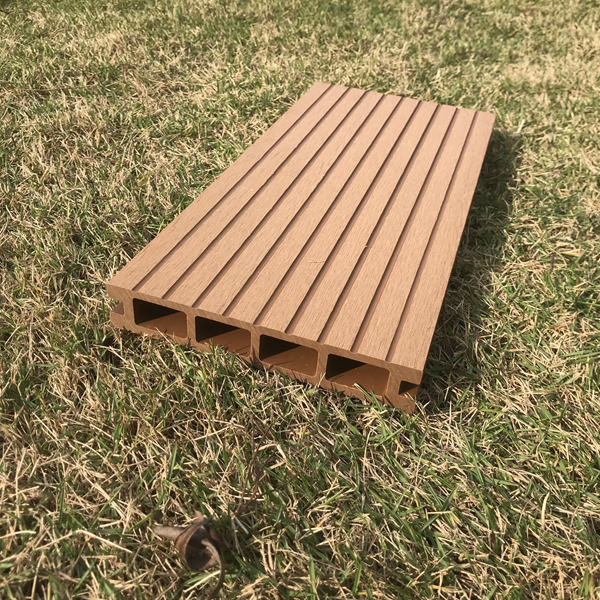
Finished composite deck joists are tested using practical quality standards that include density measurement, bending strength testing, impact resistance evaluation, water absorption testing, and accelerated weathering assessment. Dimensional accuracy is measured with precision tools because even small deviations can affect installation efficiency. Surface inspection is carried out to identify colour variation, bubbles, cracks, or extrusion marks before products are approved for export.
International OEM Standards And Custom Product Development
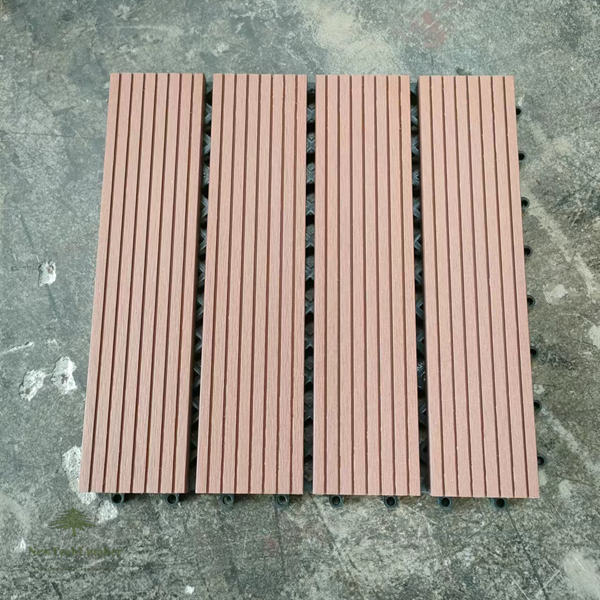
International buyers often require more than standard WPC profiles. They need materials adapted to local regulations, installation systems, and environmental conditions. Our engineering team works with customers to adjust formulations, profile structures, colours, packaging methods, and production processes. A custom composite deck joists project requires cooperation between raw material control, extrusion technology, mould design, and quality management departments.
For export markets, documentation and traceability are also essential. Each production batch is recorded with raw material information, processing parameters, and inspection results. This approach allows factories to identify potential issues quickly and provide reliable after-sales support. Consistent quality control helps WPC manufacturers deliver products suitable for residential, commercial, and landscape applications across different climates.
Material Engineering For Long-Term Outdoor Performance
The durability of outdoor WPC products depends on precise formulation design rather than any single ingredient. Wood powder, HDPE or PVC polymers, additives, pigments, and modifiers must work together through controlled manufacturing processes. From a factory quality control perspective, every material decision influences the final performance of composite deck joists and related outdoor products.
Professional WPC production combines laboratory testing with practical manufacturing experience. By maintaining strict raw material inspection, accurate extrusion control, and continuous quality evaluation, a Guangdong outdoor WPC factory can support international OEM partners with stable, weather-resistant, and application-focused solutions.